Schedule E Instructions for Rental Property: What Records Go on Each Line?
Schedule E instructions for rental property, with a 2025 line-by-line record guide, notes on loss limits, and a list of what to bring to your tax preparer.
By Ultimate Rental Property Tracker by Cosmo Suite · Editorial policy
Published · 8 min read
Schedule E Instructions for Rental Property: What Records Go on Each Line?
General information, not tax or legal advice. Ask your tax preparer or a local attorney about your situation.
March is a poor time to discover that the rent ledger is in one file and the repair receipts are spread across email and a drawer. The Schedule E instructions tell you where rental income and expenses go. Your records explain where each figure came from.
For a typical long-term residential rental, Schedule E, Part I lists income and expenses by property. Before you start the 2025 form, match each amount to its source: a rent record, receipt, statement, invoice, or tax workpaper. The guide below follows the IRS 2025 Schedule E and shows the records worth gathering. Use it to prepare for a review with your tax preparer; your circumstances determine tax treatment.
Key takeaways
- Match each income or expense figure to a source record and property.
- Keep lines 20, 21, and 22 separate because each serves a different purpose.
- Save a preparer’s depreciation calculation rather than estimating it in the log.
- Use the instructions for the tax year on your return.
Schedule E at a glance: line-to-record guide
For rental real estate, the first page of Schedule E separates property details, rent, expense categories, and the result after limits. Keep a separate source trail for each property. These are records to gather, not a ruling that an item qualifies as a deduction.
| Schedule E line | What it records | Source record to gather |
|---|---|---|
| 1ato1b | Property address and type | Property record, deed or lease file |
| 2 | Fair-rental and personal-use days | Calendar, booking or occupancy record |
| 3 | Rents received | Rent ledger, deposit record, lease and payment detail |
| 4 | Royalties, not ordinary residential rent | Royalty statement or payer form |
| 5to11 | Advertising, travel, cleaning, commissions, insurance, professional and management fees | Invoice, receipt, statement, contract and purpose note |
| 12to13 | Mortgage interest and other interest | Form 1098, lender statement, loan and payment records |
| 14to17 | Repairs, supplies, taxes and utilities | Work order, receipt, tax bill or utility statement |
| 18to19 | Depreciation or depletion; other listed expenses | Depreciation workpaper, supporting calculation, receipt and explanation |
| 20to22 | Total expenses, result before limitations, and deductible rental real-estate loss after Form 8582 when applicable | Category totals, reconciliation, and preparer review |
Line 20 adds expenses from lines 5 through 19. Line 21 subtracts those expenses from rents and/or royalties and points to Form 6198 when an at-risk limitation may apply. Line 22 is for deductible rental real-estate loss after any Form 8582 limitation. A loss on line 21 and a deductible loss on line 22 are not always the same figure. The current rental property spreadsheet guide explains how property, rent, expense, and yearly records can connect before they reach a tax form.
Start with one property and a clean income record
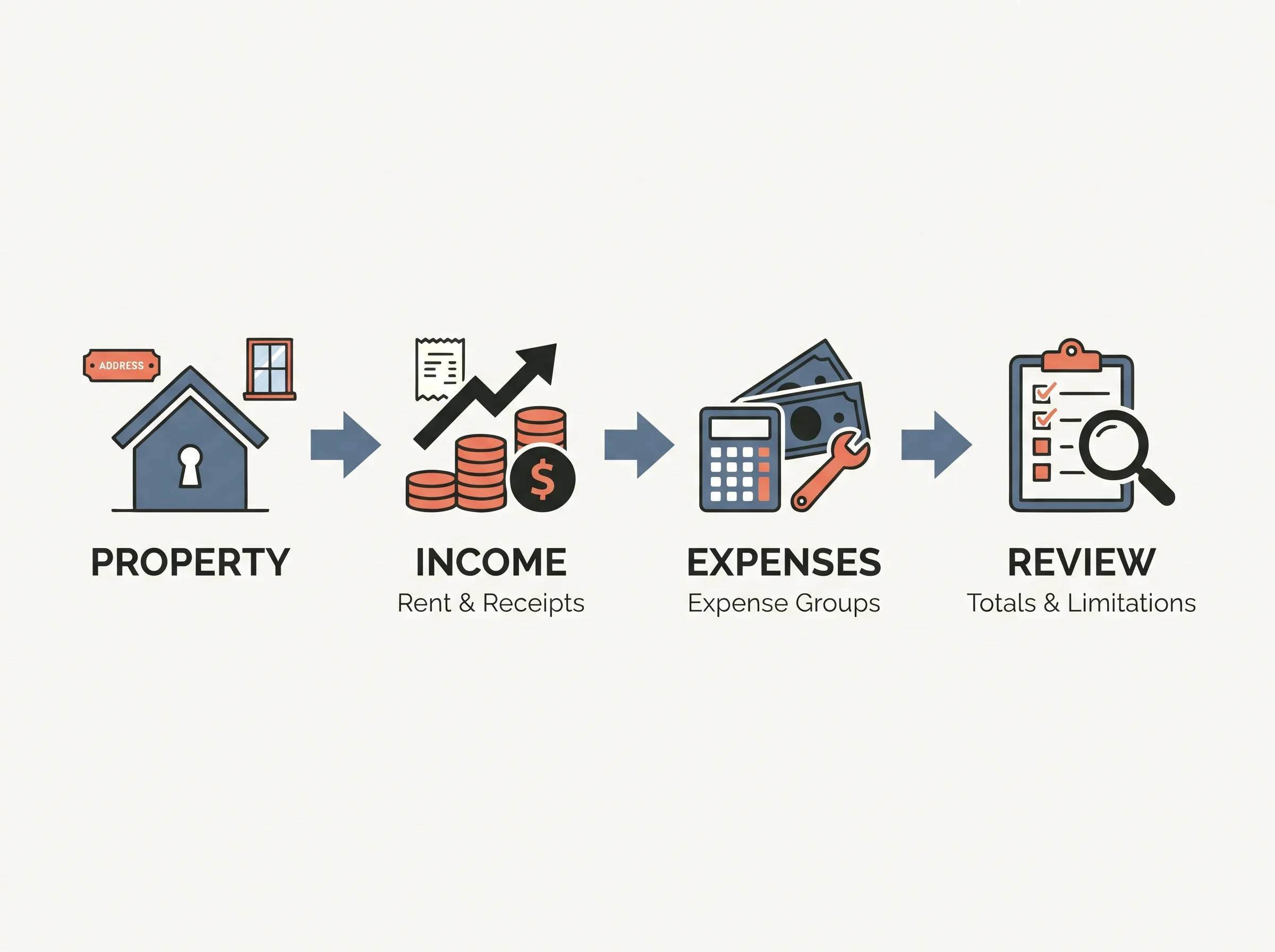
The first useful question is: can you trace every amount to the right property? Line 1a asks for the physical address and line 1b for the type of property. Line 2 records fair-rental and personal-use days for each rental real-estate property. A lease file, property list, and calendar help you confirm those details.
Line 3 is for rents received. Keep the rent ledger beside the payment evidence so a reviewer can see the month due, amount received, date paid, and property. If you received something other than money as rent, or had other rental income, keep a description and the related document. The IRS instructions explain these cases and also warn that some activities belong on another form. For example, substantial services to tenants may move an activity to Schedule C, and farm rent based on crops can require Form 4835.
Line 4 is for certain royalties. It is part of Schedule E but does not represent ordinary rent from a house or apartment. Keep a separate royalty statement if it applies to you. Do not roll an unusual receipt into rent just because it came from the same property.
A rental-income log is easier to review when each row has a property, date, payer or source, amount, and short description. Keep the lease and deposit evidence nearby. The IRS 2025 Schedule E instructions describe what goes on line 3 and the situations that can change the form to use. A rental tracker with a rent ledger and income log can keep those records in one workflow, while you retain the actual payment documents.
Match each expense line to its evidence
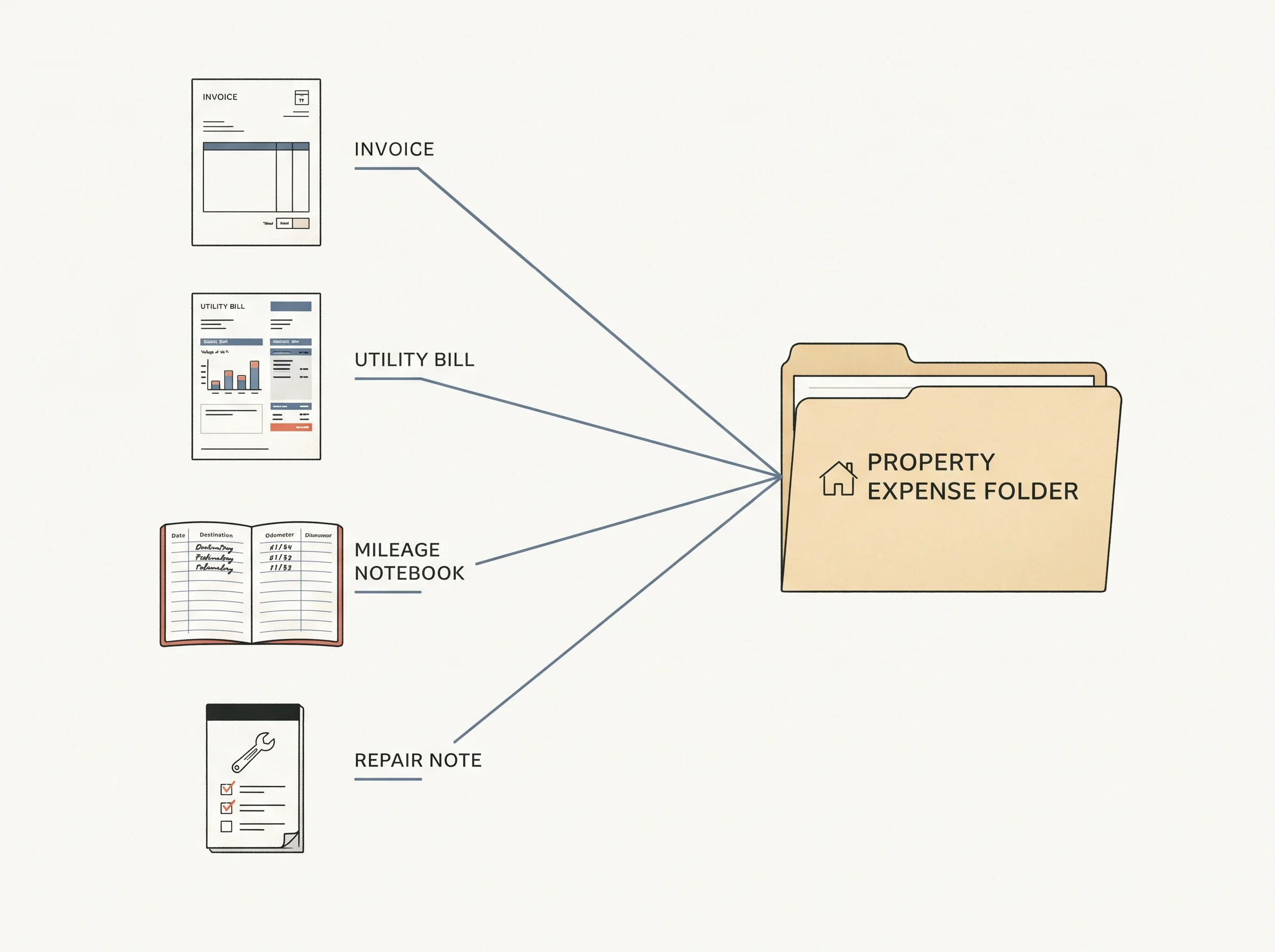
Schedule E groups common expenses, but the label alone does not prove how a cost should be treated. For each payment, save the date, property, payee, amount, reason, and the source document. Then compare the category with the current instructions or your preparer’s guidance.
| Lines | Form category | Useful source record |
|---|---|---|
| 5 | Advertising | Ad invoice, date, property and listing purpose |
| 6 | Auto and travel | Mileage log or travel record, destination and rental purpose |
| 7 | Cleaning and maintenance | Service invoice, work description and payment evidence |
| 8 | Commissions | Agent or leasing agreement and statement |
| 9 | Insurance | Policy statement and proof of premium paid |
| 10 | Legal and other professional fees | Itemized invoice showing the service provided |
| 11 | Management fees | Management statement or contract and fee detail |
| 12to13 | Mortgage interest; other interest | Form 1098, lender statement, loan use and payment record |
| 14 | Repairs | Receipt or invoice describing the work and property |
| 15 | Supplies | Itemized receipt and note about rental use |
| 16 | Taxes | Property tax bill or other tax statement |
| 17 | Utilities | Utility bill and any note needed to explain a shared charge |
| 18 | Depreciation or depletion | Calculation and supporting workpaper; ask your preparer |
| 19 | Other | Itemized source plus a clear description of why it is not elsewhere listed |
A line 14 entry needs a description of the work. A category alone does not show how to treat a cost. The IRS describes repairs as work that keeps property in ordinarily efficient operating condition, with examples such as fixing a broken lock or painting a room. Work that betters, restores, or adapts property can be an improvement, which may need to be capitalized and depreciated. The invoice should describe what was done. A label such as “repair” in a spreadsheet cannot settle the tax treatment by itself.
Depreciation needs its own paper trail. The IRS says line 18 is for depreciation or depletion and points readers to Form 4562 and Publication 527 for applicable calculations. The land portion of a property is not depreciable. Keep the purchase and placed-in-service records, basis allocation, improvement invoices, and calculation from the preparer or source worksheet. A log can store the amount and point to that workpaper; it should not invent or calculate the figure.
Use a simple filing rule: save the original document, enter one transaction with its property and date, then record the category and where the document lives. Once a month, compare the log with statements and mark gaps for follow-up. The IRS recordkeeping guidance for rental real estate says records should support rental income and expenses and help prepare financial statements and tax returns.
Read the total and loss lines carefully
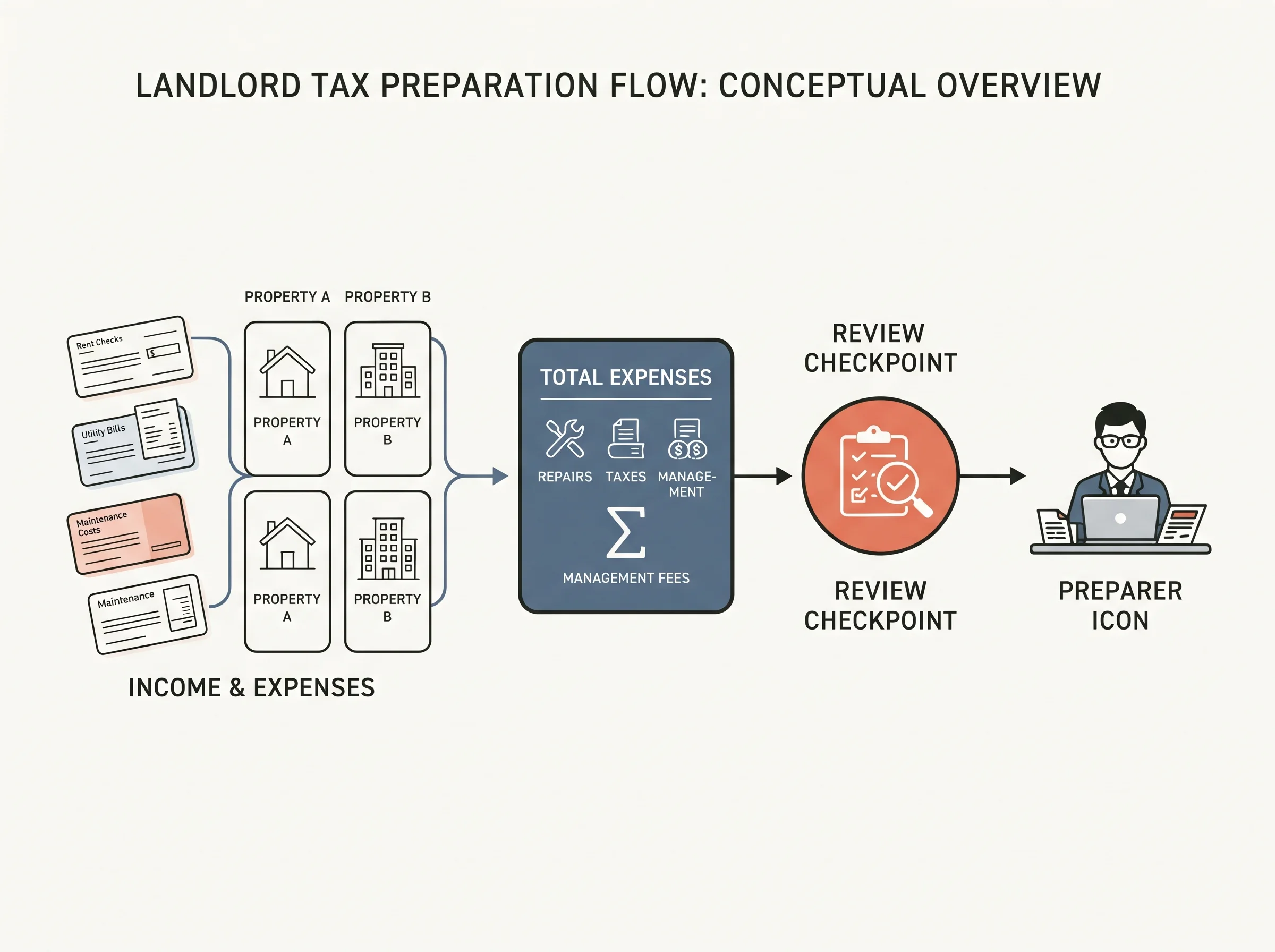
Lines 20, 21, and 22 are three different checkpoints. Line 20 totals expense lines 5 through 19. Line 21 subtracts line 20 from line 3 rent and/or line 4 royalties. Line 22 reports deductible rental real-estate loss after a Form 8582 limitation, if one applies. The instructions also refer to Form 6198 for certain at-risk limits on a loss.
When there is more than one property, keep the individual property columns intact before reviewing the totals. The form has separate total lines for rents, royalties, mortgage interest, depreciation, and expenses. The IRS instructions say that if you have more than three rental real-estate or royalty properties, you attach as many Schedule E forms as needed to list them, then combine certain totals on one form.
Personal use can affect the expense picture. If you rent a dwelling you also use personally, the fair-rental and personal-use days on line 2 matter. The 2025 instructions and Publication 527 explain when rental expenses may be limited. Losses can also run into at-risk or passive activity rules. Those rules depend on facts outside a basic rent-and-expense log. Gather the information and ask a tax preparer to determine how it applies.
Review the form in order. Confirm the address and property type, reconcile rent, match expenses to source records, check the line 20 total, and flag any net loss for your preparer. Note each unresolved item. Leave categories as they are until you can confirm them.
A tax-time record routine that prevents rework
Prepare for Schedule E throughout the year. After each rent payment or bill, enter the date, property, payee or payer, amount, category, and a receipt or statement location. Keep a separate maintenance record for the work itself, then link it to the payment. Save year-end statements and your depreciation workpapers in the same property folder.
At month end, compare rent entries with payment evidence and make sure each expense has a source document. Check that you can identify the property for each shared bill. Keep open items on a short list, such as a missing utility bill or a shared charge to discuss with your preparer. Mark estimates clearly.
Before you meet your preparer, sort records by property and Schedule E line. Bring the original statements and receipts along with any spreadsheet export. Note questions about mixed personal use, improvements, depreciation, or a possible loss. The IRS Publication 527 for 2025 covers rental income, expenses, depreciation, and loss limits in more detail.
How Ultimate Rental Property Tracker fits
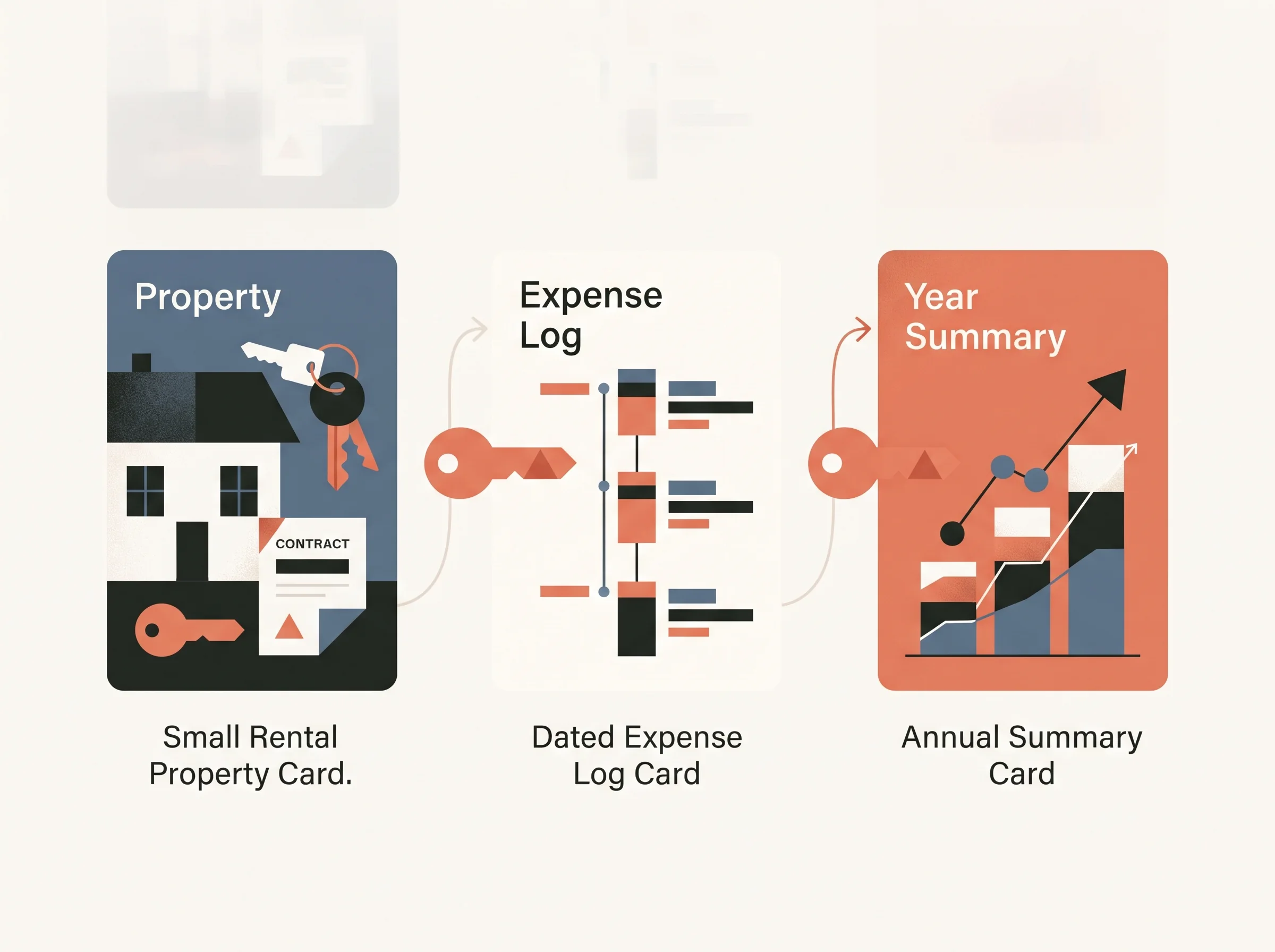
Ultimate Rental Property Tracker is a Google Sheets and Excel workbook for organizing rental records. Its published contents include 15 tabs, including Properties, Tenants & Leases, Rent Ledger, Income Log, Expense Log, Maintenance & Repairs, dashboards, and Schedule E Summary. The Schedule E Summary arranges figures you enter by property and year. It does not decide whether a cost is deductible, calculate depreciation, file a return, collect rent, or give tax advice.
The product’s contents list is the source for these feature details. This article was checked against the IRS 2025 Schedule E form and instructions on October 31, 2026. The IRS sources linked above are the authority for federal form instructions. You can review the rental property recordkeeping workbook if a connected log and summary fit your process. Keep your original records and ask your tax preparer about your situation.
Frequently asked questions
Does every landlord report rental income on Schedule E?
Many owners of residential rental real estate report income and expenses on Schedule E, Part I. The right form can change if you provide substantial services, rent personal property, operate as a real estate dealer, or have another special situation. Check the current IRS instructions or ask a tax preparer.
What records should I keep for Schedule E?
Keep records that show the property, date, amount, and reason for each receipt or expense. You may need leases, rent records, receipts, invoices, bank or mortgage statements, tax bills, insurance statements, mileage records, and depreciation workpapers. Ask your tax preparer which records matter for your situation.
Which Schedule E line is for repairs?
On the 2025 Schedule E, line 14 is for repairs. Tax treatment depends on the work. The IRS distinguishes repairs that keep property in ordinarily efficient operating condition from improvements that may need to be capitalized and depreciated.
Does Schedule E calculate rental property depreciation?
Schedule E has a line for depreciation, but it does not calculate the amount. Use the applicable tax rules and records. The IRS points to Form 4562 and Publication 527 for guidance. A tracking sheet can store a figure from your preparer.
What if my rental expenses are higher than rent?
A loss on the form may differ from the amount deductible on your return. At-risk and passive activity rules can limit a rental real-estate loss, and other rules may apply. The IRS instructions discuss Forms 6198 and 8582. Ask a tax preparer how the rules apply to you.
Can a spreadsheet replace Schedule E?
A spreadsheet can organize income, expenses, and source records for review. You still need the IRS form and the instructions for the tax year you are filing. A spreadsheet does not decide what is deductible, calculate depreciation, or file a return.
Sources
Keep reading
Schedule E and Tax Time
Rental Property Tax Deductions Checklist: Schedule E Records to Gather
Rental property tax deductions checklist: gather Schedule E receipts, statements, and workpapers by property, then flag tax questions for your preparer.
· 8 min read
Schedule E and Tax Time
Schedule E Worksheet for Rental Property: What to Gather
Use this Schedule E worksheet guide to match rental property income and expense lines to the records you can gather for your tax preparer.
· 7 min read
